Journal · Testing
Bacterial endotoxin testing, explained
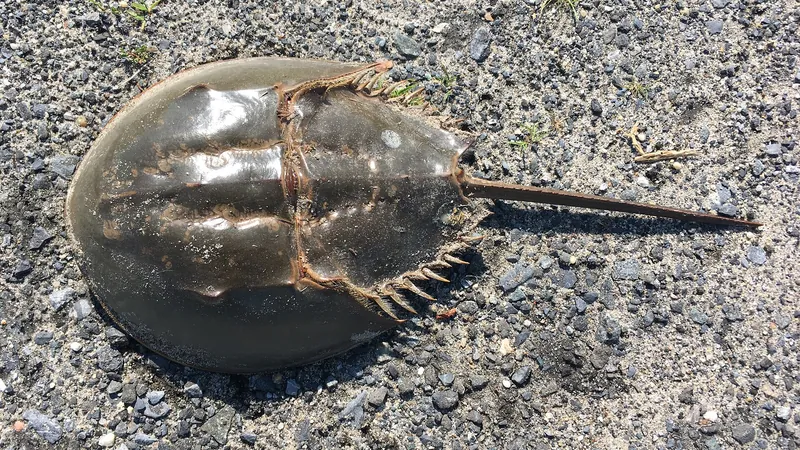
The test measures endotoxin from Gram-negative bacteria with a lysate made from horseshoe crab blood cells, and reports it in endotoxin units (EU) per vial.
Uses the lab reports of the 11 tested lots on this site
Key takeaways
- Endotoxins come from Gram-negative bacteria. The test uses a lysate made from horseshoe crab blood cells.
- Results are in endotoxin units (EU) per vial. One EU equals one International Unit.
- Endotoxin is separate from purity and from microbial counts: each needs its own test.
Endotoxin is an easy line to skip on a report. It answers a question that purity never can.
What the test detects
The bacterial endotoxins test detects or measures endotoxins from Gram-negative bacteria[1]. Endotoxin is not part of the peptide and does not show up as a purity peak, so it needs a test of its own.
How it is measured
The test uses amoebocyte lysate, a reagent made from the blood cells of the horseshoe crab (Limulus polyphemus or Tachypleus tridentatus). It has three techniques (Figure 1)[1]. Gel-clot reads the formation of a gel, turbidimetric reads cloudiness, and chromogenic reads colour. The same chapter is harmonised between the European, US and Japanese pharmacopoeias.
The US Food and Drug Administration has accepted this lysate test in place of the older rabbit pyrogen test for more than 30 years[2].
Endotoxin units
Results are given in endotoxin units (EU). One International Unit of endotoxin equals one EU, and the reference standard is calibrated to the WHO International Standard for Endotoxin[1]. On BP's reports the result is given for the whole vial.
Endotoxin on this site
Figure 2 lists every lot. Below 10 EU per vial we show "<10 EU/vial (pass)": 10 of the 11 lots are below it. T1RZ3P4T1D3 (batch 2029/1) reads 14.845 EU/vial, shown as the lab printed it[3]. Each lab report, linked from the COA page, gives the exact figure for its lot.
| Product | Bacterial endotoxin |
|---|---|
| 3P1TH4L0NLot EP-470 | <10 EU/vial (pass) |
| 6HK-CULot GH-692 | <10 EU/vial (pass) |
| 8PC Wolverine StackLot BT-317 | <10 EU/vial (pass) |
| 8PC-157Lot BP-482 | <10 EU/vial (pass) |
| C1C-1295 + 1P4M0R3L1NLot CI-741 | <10 EU/vial (pass) |
| M0TS-CLot MC-823 | <10 EU/vial (pass) |
| R3T4Batch 2029/1 | <10 EU/vial (pass) |
| S3L4NKLot SL-547 | <10 EU/vial (pass) |
| S3M4XLot SM-381 | <10 EU/vial (pass) |
| T1RZ3P4T1D3Batch 2029/1 | 14.845 EU/vial |
| T3S4M0R3L1NLot TE-156 | <10 EU/vial (pass) |
Not purity, and not microbes
Endotoxin does not appear as a purity peak. A lot can be very pure and still carry a high endotoxin figure, and the reverse is possible too. It is also a different question from the microbial counts on a report, which look for living bacteria, yeasts and moulds. The article on microbial counts explains that test.
What to ask a supplier
If a supplier shows you only a purity figure, ask for the endotoxin result for your lot, from an independent lab, with the report number.
Check it on real reports. The COA library has the full lab reports for 11 lots, with the original PDFs and links to the lab's own copies. Open the COA library
Sources
- Pharmacopoeial Discussion Group. Bacterial Endotoxins Test, Revision 2 (harmonised USP <85>, Ph. Eur. 2.6.14, JP 4.01). Sign-off cover sheet version 2, April 2026, published by PMDA. pmda.go.jp (PDF)
- US Food and Drug Administration. Pyrogen and endotoxins testing: questions and answers (Edition 2). Guidance for industry, March 2026. Section II, Background. fda.gov (PDF)
- Bali Peptide Supply. COA library: every lab report for the lots sold on this site. Reports issued by Janoshik Analytical, with their task numbers, keys and original PDFs. balipeptidesupply.com/coa/
Each source was read in its own document on 16 Oct 2026. Numbers about BP's lots come from the reports in the COA library.
How this article was made
Written by Bali Peptide Supply from the sources listed above, each read in its own document on 16 Oct 2026. Every number about our lots comes from the Janoshik Analytical reports in the COA library, read by the site build, not typed by hand. The lead photo is from Wikimedia Commons under a free licence.
BP sells research materials for laboratory use only. This article explains laboratory testing and lab reports. It is not medical advice and not instructions for use.
Keep reading
 Testing
TAMC and TYMC: what the microbial counts on a report measure
The last test on each BP report is a pair of microbial counts. Here is what they look for, and what a pass does and does not say.
2 min read · 3 sources Testing
HPLC purity: what 99% means, and what it leaves out
Purity is the number most people read first. It is a precise answer to a narrow question.
4 min read · 4 sources Testing
Heavy metals: what "not detected" really means
"Not detected" is the result everyone wants to see. It has a precise meaning, and it is worth knowing it.
2 min read · 3 sources