Journal · Testing
Identity first: how LC-MS shows what is in the vial
Liquid chromatography separates the sample, mass spectrometry measures the mass of each part, and a match with the expected mass confirms the compound.
Uses the lab reports of the 11 tested lots on this site
Key takeaways
- Mass spectrometry measures the mass of molecules; the expected mass confirms identity.
- Liquid chromatography first separates the sample, so each component is measured on its own.
- Some differences do not change the mass, such as mirror-image amino acids, and need extra techniques.
A very pure sample of the wrong compound is still the wrong compound. Identity is the first question a report should answer.
Why identity comes first
Peptide quality specifications cover identification, purity and assay[1]. Every number after identity assumes the sample is what the label says. A purity of 99% describes the main peak, whatever that peak is.
Laboratories confirm identity with methods such as nuclear magnetic resonance, mass spectrometry and chromatography, and measure purity and content with HPLC[2].
What LC-MS does
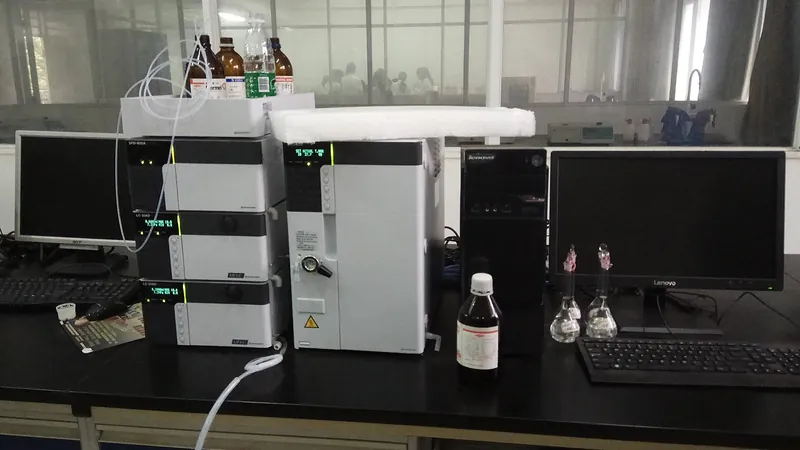
LC-MS joins two instruments. Liquid chromatography (LC) separates the sample in time, as in an HPLC purity test. The mass spectrometer (MS) then measures the mass of each component as it leaves the column. Matching a measured mass to the mass a compound should have is evidence of what that component is. Mass spectrometry is increasingly used to characterise the impurities of synthetic peptides[3].
- Liquid chromatography separates the sample: each component leaves the column at its own time.
- The mass spectrometer measures the mass of what leaves the column at each moment.
- Each measured mass is matched to what it can be: the peptide, a bulking agent, a degradation product.
What the lab found in our lots
Each lot on this site has an LC-MS screening report. In the comment the lab names what it identified. For 9 of the 11 lots it adds "No significant contamination detected". The reports for R3T4, T1RZ3P4T1D3, from Nov 2025, do not carry that sentence[4].
| Product | What the lab identified |
|---|---|
| 3P1TH4L0NLot EP-470 | mannitol, 3P1TH4L0N, degradation productsPass |
| 6HK-CULot GH-692 | mannitol, 6HK‑CU, degradation productsPass |
| 8PC Wolverine StackLot BT-317 | mannitol, T8‑500 (T84), 8PC‑157, degradation productsPass |
| 8PC-157Lot BP-482 | mannitol, 8PC‑157, degradation productsPass |
| C1C-1295 + 1P4M0R3L1NLot CI-741 | mannitol, 1P4M0R3L1N, C1C‑1295, degradation productsPass |
| M0TS-CLot MC-823 | mannitol, M0TS‑C, degradation productsPass |
| R3T4Batch 2029/1 | mannitol, R3T4, degradation productThe comment lists what was found, without a contamination sentence |
| S3L4NKLot SL-547 | mannitol, S3L4NK, degradation productsPass |
| S3M4XLot SM-381 | mannitol, S3M4X, degradation productsPass |
| T1RZ3P4T1D3Batch 2029/1 | mannitol, T1RZ3P4T1D3, degradation productThe comment lists what was found, without a contamination sentence |
| T3S4M0R3L1NLot TE-156 | mannitol, T3S4M0R3L1N, degradation productsPass |
Mannitol and degradation products
Two names come up on every report. Mannitol is used as a bulking agent in freeze-drying[5]. Degradation products are molecules formed as a peptide slowly breaks down; synthetic peptides change through their starting materials, their manufacture and their storage[3].
What mass alone cannot tell
Two molecules can share a mass. Some amino acids have the same mass as another, and a mirror-image amino acid weighs the same as the original. Characterising those needs additional techniques[2,3]. A screening comment confirms what the lab identified; it is not a full structural analysis.
Check it on real reports. The COA library has the full lab reports for 11 lots, with the original PDFs and links to the lab's own copies. Open the COA library
Sources
- Vergote V, Burvenich C, Van de Wiele C, De Spiegeleer B. Quality specifications for peptide drugs: a regulatory-pharmaceutical approach. Journal of Peptide Science 2009;15(11):697-710. doi.org/10.1002/psc.1167
- McCarthy D, Han Y, Carrick K, Schmidt D, Workman W, Matejtschuk P, Duru C, Atouf F. Reference standards to support quality of synthetic peptide therapeutics. Pharmaceutical Research 2023;40(6):1317-1328. Open access. doi.org/10.1007/s11095-023-03493-1
- Lian Z, Wang N, Tian Y, Huang L. Characterization of synthetic peptide therapeutics using liquid chromatography-mass spectrometry: challenges, solutions, pitfalls, and future perspectives. Journal of the American Society for Mass Spectrometry 2021;32(8):1852-1860. doi.org/10.1021/jasms.0c00479
- Bali Peptide Supply. COA library: every lab report for the lots sold on this site. Reports issued by Janoshik Analytical, with their task numbers, keys and original PDFs. balipeptidesupply.com/coa/
- Liao X, Krishnamurthy R, Suryanarayanan R. Influence of the active pharmaceutical ingredient concentration on the physical state of mannitol: implications in freeze-drying. Pharmaceutical Research 2005;22(11):1978-1985. doi.org/10.1007/s11095-005-7625-x
Each source was read in its own document on 16 Oct 2026. Numbers about BP's lots come from the reports in the COA library.
How this article was made
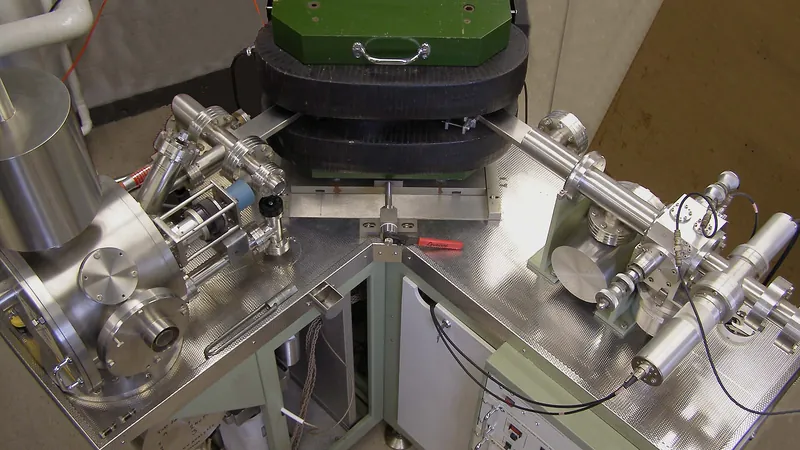
Written by Bali Peptide Supply from the sources listed above, each read in its own document on 16 Oct 2026. Every number about our lots comes from the Janoshik Analytical reports in the COA library, read by the site build, not typed by hand. The lead photo is from Wikimedia Commons under a free licence.
BP sells research materials for laboratory use only. This article explains laboratory testing and lab reports. It is not medical advice and not instructions for use.
Keep reading
 Testing
HPLC purity: what 99% means, and what it leaves out
Purity is the number most people read first. It is a precise answer to a narrow question.
4 min read · 4 sources Reading reports
How to read a Janoshik test report, field by field
A lab report answers a few precise questions. This guide takes one real report from our COA library and reads it one field at a time.
4 min read · 3 sources Reading reports
Measured content versus the label: why the numbers differ
The label is the amount the vial is meant to hold. The report is the amount the lab found. They are rarely identical.
2 min read · 4 sources